
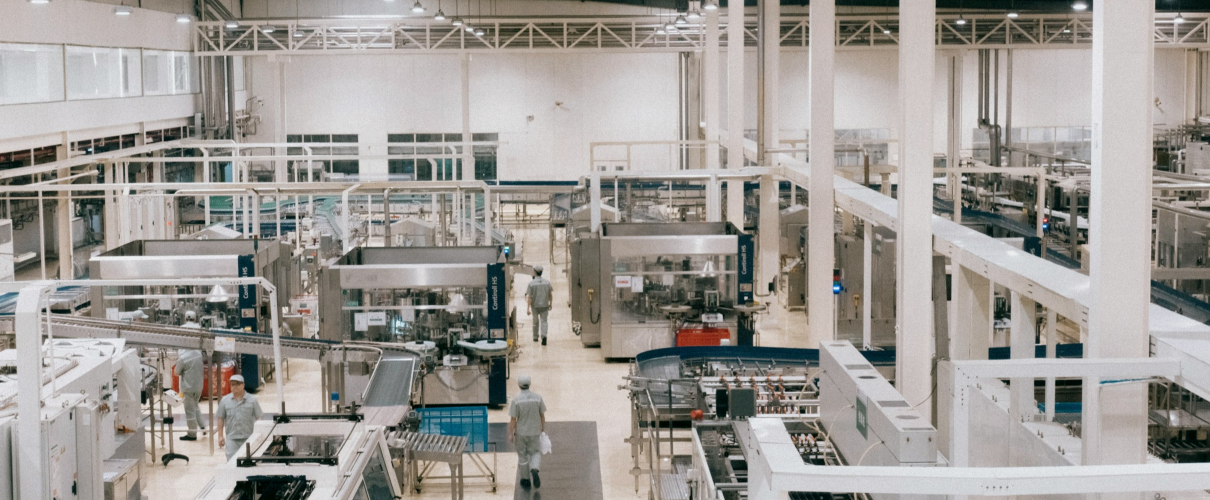
The industrial sector is one of the largest consumers of electricity in Spain. High lighting and air-conditioning requirements, as well as the continuous use of energy-intensive machinery, are the main reasons why The electricity bills of industrial companies are often exorbitant.
However, despite the high energy requirements, any factory can implement energy saving actions and pay less for electricity each month, while being both more energy efficient and a more environmentally sustainable business. But that's not all, reducing your company's energy consumption also helps you be more competitive in the marketplace and comply with energy efficiency laws.
In this article we want to give you 10 energy saving tips for your industry with the aim of maintaining your production and the quality of work of your employees by using less energy in the process, i.e. investing less.
1. Switch to LED bulbs, sensors and timers for energy savings
Compared to conventional incandescent bulbs, LED bulbs use up to 80% less energy. But that's not all, they are much more durable, with a lifetime of up to 100,000 hours compared to 1,000 hours for incandescent bulbs.
As for sensors, these are devices that automatically switch on certain lights when they detect movement or when the ambient light decreases. It can be very interesting to install them in order to switch off the factory lights when no one is present or when there is sufficient natural light, such as corridors or warehouses.
Finally, timers are systems that allow you to program the switching on and off of a specific area so that the light is automatically available only during working hours or operating of a piece of machinery. In this way, the consequences of forgetting or switching off can be avoided.
2. Choose a suitable insulation for walls, ceiling and floors.
Adequate isolation from the industrial environment will allow for no heat escaping in winter and no heat coming in in summer. This, in turn, will mean that it will not be necessary to use both heating and cooling systems and air conditioning, with the consequent energy savings that this entails. In addition, the temperature will be more stable throughout the room and the working environment will be much more comfortable.
3. Install an energy meter
Electricity meters are devices that measure energy consumption of an electrical service or circuit. Having one or more in your installations will allow you to monitor the amount of energy you have consumed and to know concretely where the most energy is spent and why. Thanks to this information provided by the energy meters you will be able to optimise the energy consumption of your factory and save energy and costs.
At SACI we have this type of device available and, if you decide to install one, we recommend you our Smartenergy energy meter, which not only measures your spending in real time, but also allows you to remotely cut off and reactivate supply via its own app.
4. Thoroughly review your industrial processes and machinery.
In order to increase your company's energy savings, we also recommend that you check the age of your machinery, you may be working with obsolete equipment that is wasting a lot of energy. when in fact new versions are available on the market that are much more energy efficient.
But if you don't want to change equipment, the best way to ensure that they remain efficient is to carry out maintenance on a regular basis that detect problems early and prolong their service life.
Finally, make sure that there are no inefficient and unnecessary steps in your manufacturing processes.
5. Install heat recovery systems
During certain industrial processes, waste energy is generated and dissipated as heat. However, this energy can be harnessed using so-called heat recovery systems, which capture and reuse this energy in other factory processes.
It is very common to install such systems in boilers, furnaces, dryers or in ventilation systems.
6. Take advantage of natural light as an energy saving measure
Natural light is one of the main sources of free, renewable energy. Moreover, it can be used to a remarkable extent in Spain.
Although equipping your installation with solar panels can be an excellent idea, something even more interesting is optimising the design of the complex itself, as well as its orientation, in order to maximise the use of natural daylight and thus minimise the use of artificial light. In addition, natural light produces greater comfort, thus increasing the well-being of workers and the quality of their work.
Installing large windows or skylights is a great option., Shading systems can also be installed to control the amount of light coming in during the summer season.
7. Choose the right tariff and power for greater energy savings.
It is essential to make sure that you have contracted with the electricity company a power that meets the real needs of the industry, otherwise you will be paying more for something you are not using.
In the same way, we encourage you to research the market and compare your current tariff with other companies to see if yours is in line with the rest or if you are overpaying.
8. Develop a renewable energy transition plan.
This plan is a roadmap outlining the steps to be taken to become a more renewable and energy efficient company. It contains all the necessary actions that need to be implemented to reduce dependence on fossil fuels.
If you really want to achieve significant energy savings in your industry, we recommend that you work with experts in the field and include many of the tips in this article.
9. Request an energy audit
This should be the first step to take if you want to achieve energy savings in your company.. It consists of an exhaustive evaluation of the energy consumption of the industrial plant or the different industrial plants in order to identify all possible improvements to be made in order to achieve greater energy savings. In addition to detecting possible changes, the audits also suggest specific ways of making them.
There are professionals specialised in carrying out energy audits who can help you and guide you in this energy saving process.
10. Make your employees aware of energy saving
More environmentally friendly and energy-saving workers are people more open to adapting to energy-efficient changes in the company. And not only that, but they are also people who in their working habits also adopt energy-saving behaviour.
This sensitivity and awareness may also lead them to take a closer look at daily energy expenditure and to bring good ideas to the table when proposing changes for a greener industry.
To make employees really aware of the issue of energy saving, you can:
-
- Organising workshops and talks explaining its benefits and giving advice on how to implement it.
- Conduct awareness-raising campaigns towards sustainability by handing out leaflets, hanging up posters or sending out e-mails with information about sustainability.
- Award prizes or create financial incentive programmes recognising employees who have made a significant contribution to energy savings.
We hope that all these tips have been useful and will allow you to increase energy savings in your industry. As we have already mentioned, the most advisable thing to do first of all is to carry out an energy audit that will allow you to know in which specific aspects you can improve your company to make it more energy efficient.