
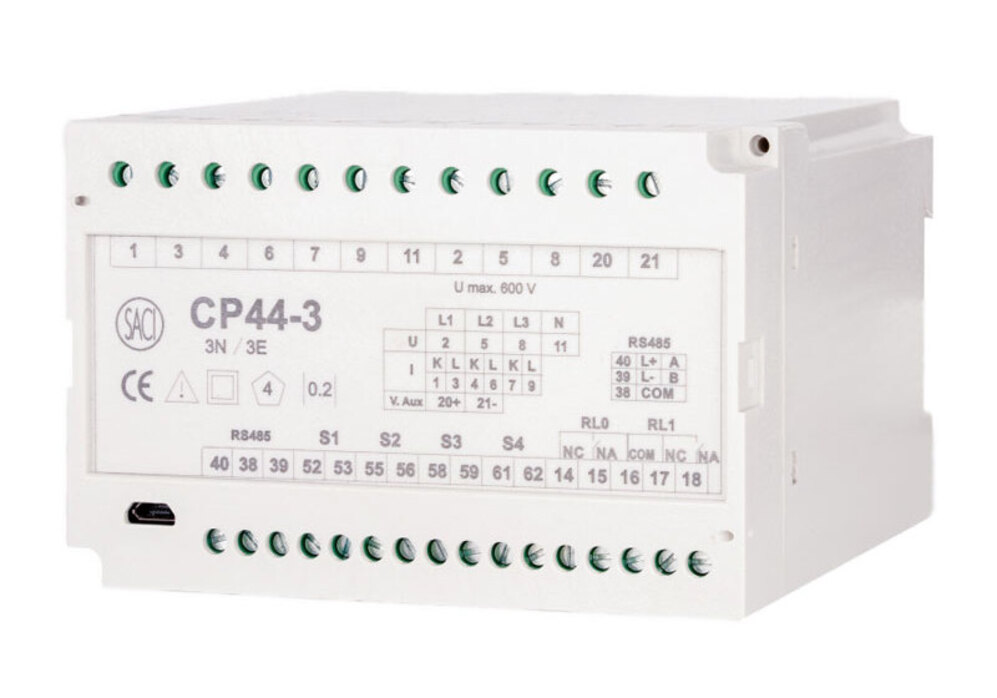
If you are wondering what a transmitter is, what it is used for and the different types, this article provides the answer to this and other questions related to these devices.
A measuring transducer in the electrical field is a system designed to transform a physical quantity into an electrical signal so that it can be interpreted by the meters. In this way, the data of these quantities can be stored, processed and displayed. In other words, these devices receive electrical magnitudes (such as voltage, current, frequency, temperature or power, among others) and convert them into electrical signals in direct current that the equipment can interpret in a more manageable way and show to professionals. This equipment can be computers, meters or control systems.
These devices are also known as measuring transducers, To give you a better understanding of what a measurement converter is, microphones are a type of transducer, as they are capable of converting sound into an electrical signal that can be transmitted by cable. That said, let's get down to business.
Characteristics of a transmitter
Now that you know what a transducer is, you can imagine that its main function is to act as an intermediary between physical quantities that humans are not able to interpret with the naked eye and the digital devices where the data are displayed.
What characterises these devices most and makes them so useful in the world of electricity is their versatility, They can transform a wide variety of signals. In addition, they are very precise and allow for very optimal control of the systems.
On the other hand, the measurement transducers also present a high speed The new technologies have a fast response time and can act accordingly to the changes detected. In fact, they work virtually instantaneously.
A good converter is also characterised by the fact that it does not need to be calibrated on a regular basis, but only occasionally, if at all. Moreover, if calibration is necessary, it is usually very simple.
Finally, rarely does a converter fail, being devices very reliable, They tend to have a lot of resistance to corrosive environments, which do not impair their operation, as well as high overload protection to withstand overloads should they occur.
Tailor-made converter types
Analogue converter
Analogue transmitters are only capable of processing basic quantities. They are available in both a fixed configuration, ideal for more general use, and also in a more flexible configuration for more complicated environments.
We recommend them when a quick and easy measurement.
Digital converter
Unlike analogue converters, digital converters can process more advanced quantities. They also tend to be more complex in design and slightly more expensive. But, like analogue converters, they are highly efficient.
Active converter
Active transducers are transducers that need to be connected to an external electrical power source in order to function and respond to the physical quantity.
Passive converter
Unlike assets, they give an automatic response to physical magnitude.
Industries where a converter is needed
There are many industries that need this type of device. At SACI we supply such systems, for example, to power plants and the renewable energy sector.
The former need them to measure pressure, temperature or turbine vibrations, among other things. The latter use them to measure solar radiation, wind speed or water level. In addition, in the latter, these devices are used to perform the reading of measurements over long distances without losing the original value.
However, in sectors such as biomedicine, construction or aerospace, such devices are also very common.
At SACI we mainly work with automation and control systems so that large magnitudes can be recorded. In that sense, our converters are specifically designed to measure force, speed and positions, as well as to monitor and ensure that optimal production is carried out and resources are not overspent.
SACI measurement converters
In our converter catalogue you can find devices for the following applications like this. However, we have multiple types of converters from which you can choose according to your needs.
If you don't know which one is ideal for your case, we encourage you to contact us and the team of professionals will help you choose the best option.