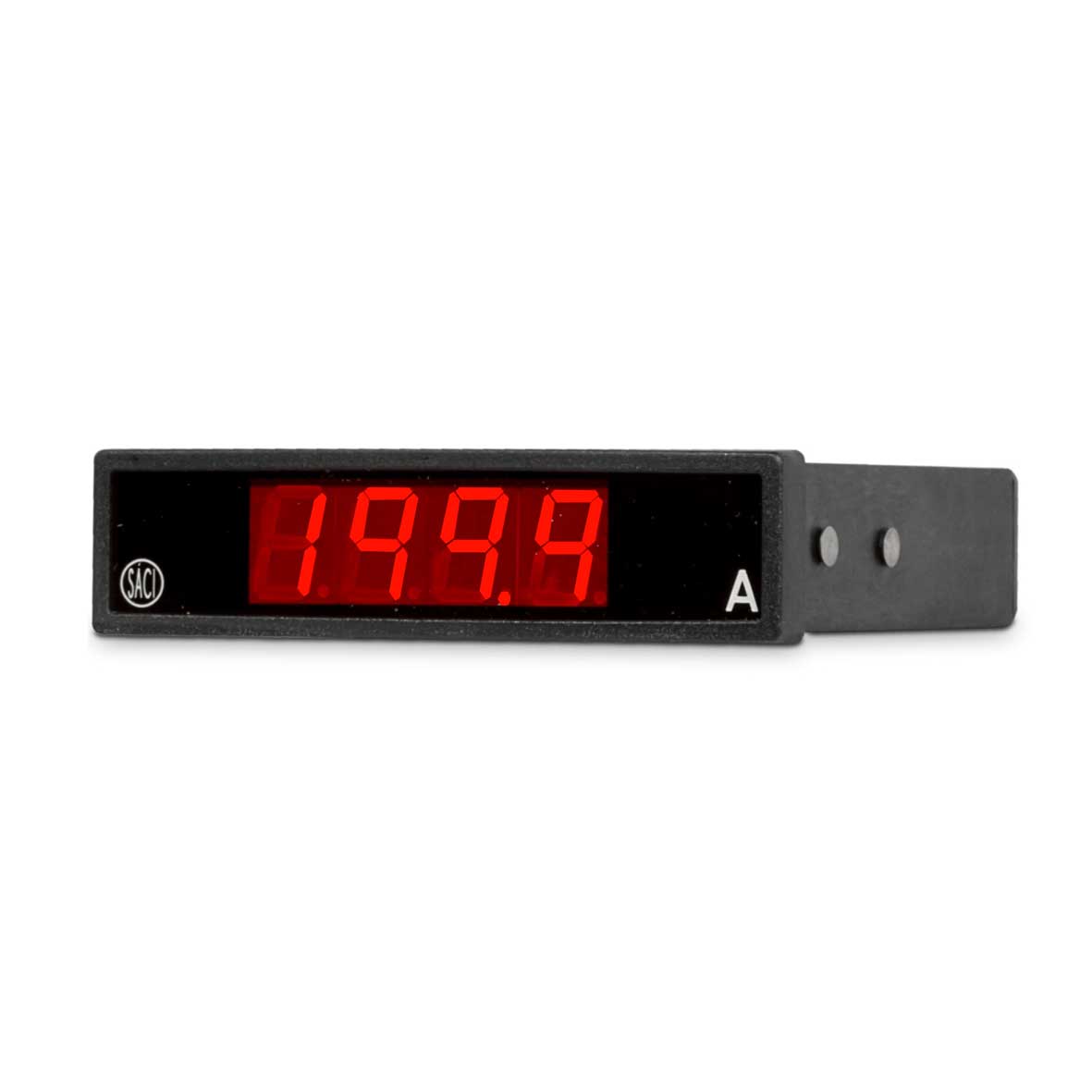
Digital voltmeters (DC)
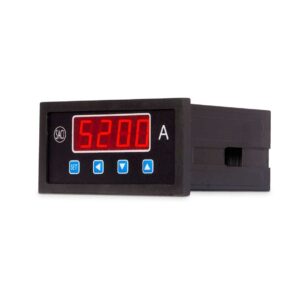
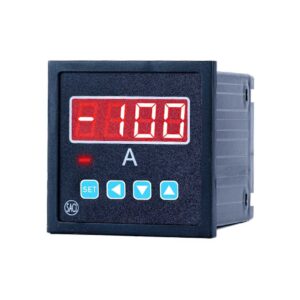
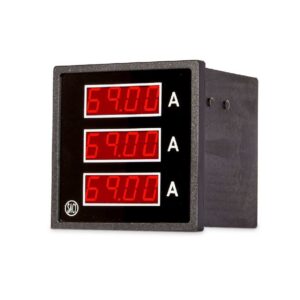
SACI's digital voltmeters (DC) are instruments that measure the voltage or power difference between two points in a DC electrical circuit. In other words, they indicate the amount of energy that is flowing from one point to another in a circuit that does not vary in direction. Our digital voltmeters go equipped with an LED display which emits the numbers in red for better visualisation. In addition, they allow 3½ and 4½ digits to be displayed for a greater precision.
SACI's digital voltmeters (DC) are instruments that measure the voltage or power difference between two points in a DC electrical circuit. In other words, they indicate the amount of energy that is flowing from one point to another in a circuit that does not vary in direction.
Our digital voltmeters go equipped with an LED display which emits the numbers in red for better visualisation. In addition, they allow 3½ and 4½ digits to be displayed for a greater precision.
Technical details
- Description
- Technical characteristics
- Technical data
Why use a voltmeter
Voltmeters can be used for different purposes:
- Identify problems in electrical circuits, such as damaged components, discharged batteries or faulty connections. They are most commonly used to ensure the correct functioning of power supply systems or motors.
- Calibrate equipment or other measuring instruments.
- Voltage monitoring from a power source such as an adapter or a battery.
- Verify that a proper connection of the cables.
- Perform accurate voltage measurement in scientific laboratory experiments.
The DP_C and DQ_C digital voltmeters are used exclusively to display the voltage of an electrical installation.
Digital voltmeters vs. analogue voltmeters - are there differences?
In addition to the differences that exist at the visual level, as the analogue voltmeters are used to measure a graduated scale and a measuring needle and digital voltmeters show the values on a numerical display, there are more things that make them different.
On the one hand, digital voltmeters can measure both direct current (such as these digital voltmeters) and alternating current, being more easy to read than analogue voltmeters. In particular, our digital (DC) voltmeters are equipped with a high luminosity so that it can be read in different environments.
On the other hand, the digital voltmeters also allow a more accurate measurement than analogue ones, which are more useful when a faster voltage measurement is needed. This is because the reading errors that can occur in the latter do not occur in the digital ones because they display their exact value with numbers.
Finally, digital voltmeters, in addition to measuring the voltage difference, may include other additional functionalities. In the case of SACI's voltmeters, they incorporate the possibility of carrying out the measurement in other units.
Voltmeter or wattmeter, which one to use?
Both measure the electrical power of a circuit. But while the voltmeter analyses the difference in electrical potential between two points in the circuit, the wattmeter measures the electrical power that has been consumed or generated over a period of time.
In that sense, voltmeters are most useful for checking the voltage of, for example, a battery, detecting faulty components in a circuit, analysing the output voltage of a power supply and monitoring the voltage at different points within a circuit.
The wattmeters are more interesting to know the energy consumption of a device, to analyse the efficiency of an electrical system, to identify overloads and to optimise the electrical consumption within a system.
Display: LED, red, high brightness, digit height 14.3 mm (for 4 1/2 Digits), 10.2 mm (for 3 1/2 Digits)
Max. reading: 19999
Overrange indication: 0000 (flashing) (for 4 1/2 Digits), 1- (for 3 1/2 Digits)
Accuracy: 0,5% of reading ± 1 digit A.C. // 0,2% of reading ± 1 digit D.C.
Auxiliary voltage: 110, 230 or 400 V AC ± 20%
Own consumption: <3 VA
Temperature coefficient: 0.007% / ºC
Measuring range: 1.999-19.99-199.9 or 600 V // 199.9 µV