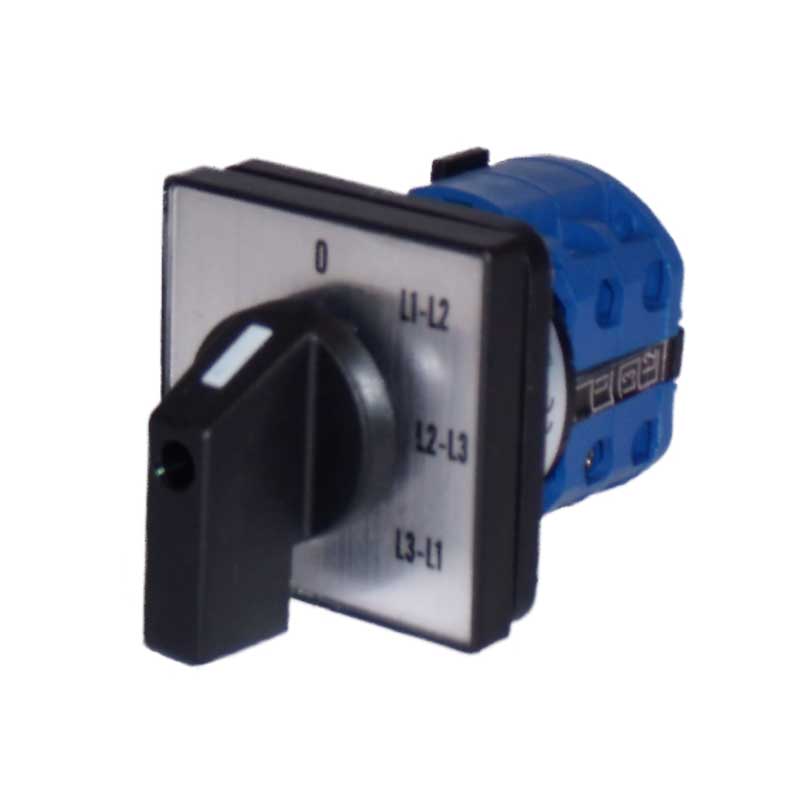
Rotary switches
A rotary switch is a manual control device used to select and redirect voltage or current signals in a control panel. These devices allow selection of the desired line or phase in the installation.
A rotary switch is a manual control device used to select and redirect voltage or current signals in a control panel. These devices allow selection of the desired line or phase in the installation.
Technical details
- Connections
- Description
- Technical characteristics
- Technical data
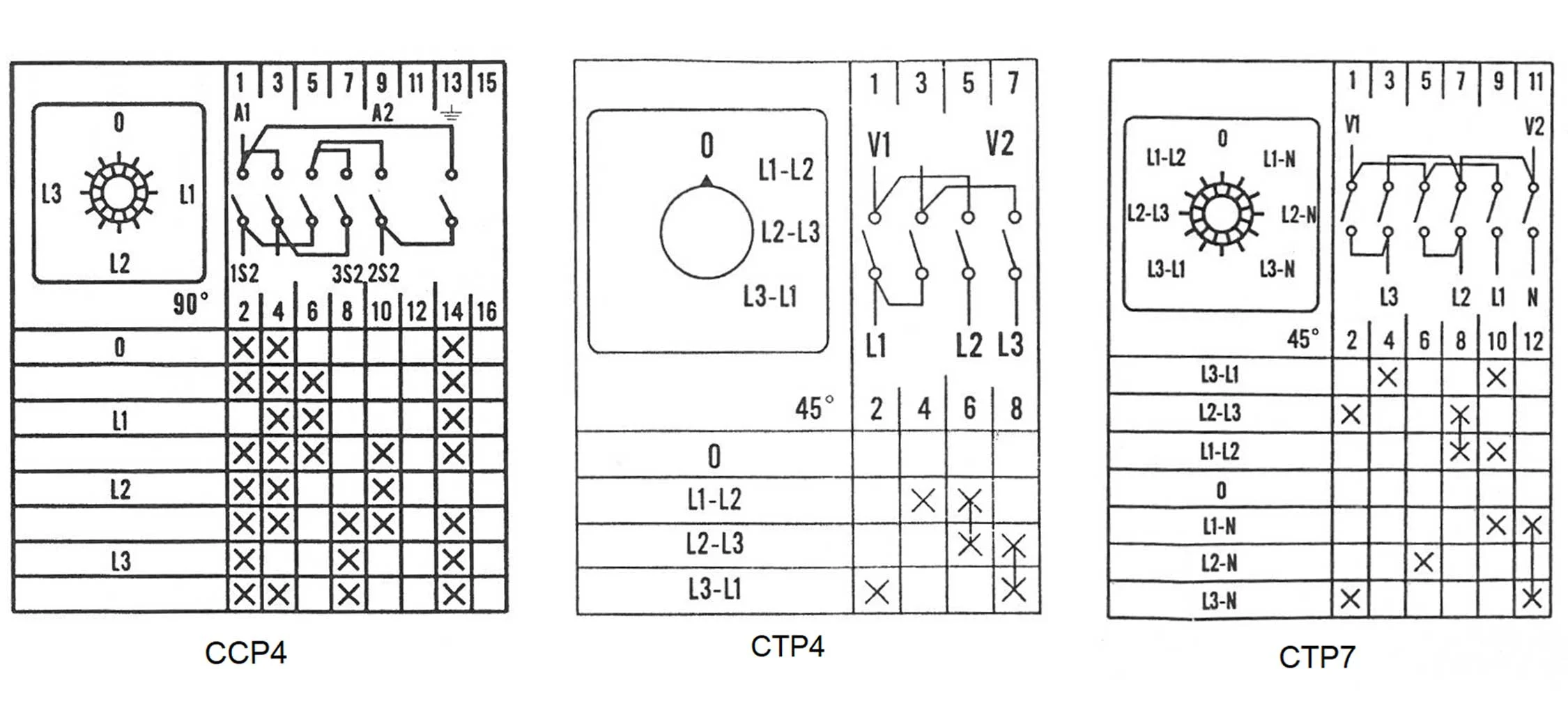
They can be used as voltmeter or ammeter switches, providing an effective solution for managing different measurement positions on a single device, whether phase-to-phase or phase-to-neutral for voltmeters or 4-line for ammeters. Designed for panel mounting, the rotary switch facilitates quick access to switching functions in electrical installations.
SACI's rotary switches are available in multiple positions, allowing users to easily switch between different metering options without compromising safety or continuity of service.
SACI rotary switches are designed to meet the requirements of reliability and accuracy in control installations:
- Diameter: Ø 22.3 mm
- Front panel dimensions: 48 x 48 mm
- Working voltage (Ue): 24, 110, 240, and 440 V
- Number of poles: 3P and 4P
- Conventional thermal current (Ith): 20 A
- Rated insulation voltage (Ui): 690 V
- Panel mounting: Yes, it allows easy integration into control panels.
Our rotary switches are available in specific versions for voltmeters and ammeters, depending on the measurement requirements:
Voltmeter switches:
- CTP-4: 4 positions (for phase-to-phase measurement)
- CTP-7: 7 positions (for phase-to-phase and phase-to-neutral measurements)
Ammeter switches:
- CCP-4: 4 positions, optimised for reliable current measurement of different lines.