
Digitisation and Smart Grids IoT
A new paradigm in the electricity sector
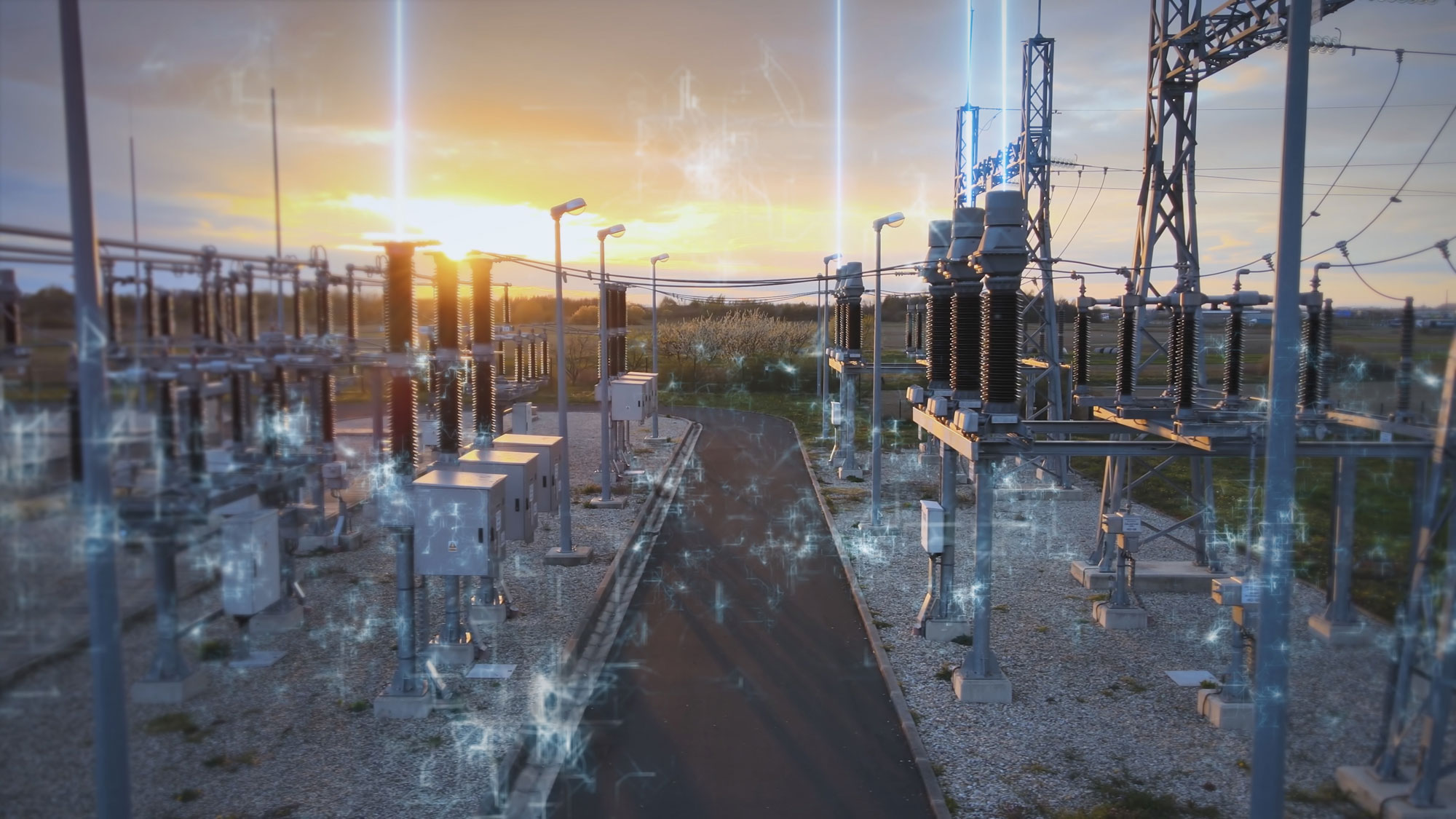
The electricity sector is undergoing a profound process of digitalisation. Installations are no longer conceived solely as energy distribution infrastructures, but also as continuous sources of information capable of delivering operational, economic and strategic value.
Today, virtually all electrical panels are connected or ready to be connected. Digitisation makes it possible to transform electrical data into useful information for improving efficiency, anticipating incidents and facilitating decision making.
This trend is particularly visible in the new technical specifications of electricity companies, The Smart Grid, which is moving towards low-voltage transformer substations that are increasingly connected, supervised and oriented towards Smart Grid models. But this approach is not limited to utilities: industry, infrastructure and the tertiary sector are moving in the same direction.
The challenge:
managing increasingly complex installations
The growth of connected installations poses new challenges:
- Increased volume of electrical data available.
- Need for remote and real-time access.
- Integration of information from different teams.
- Increasing demands for reliability, continuity of service and energy efficiency.
Without an adequate architecture of measurement, concentration and monitoring, digitisation becomes meaningless. Having data is not enoughThe following is needed: they need to be reliably captured, organised and converted into actionable information.
Digitise to make a better decision

A digitised electricity infrastructure enables:
- Monitor the status of the installation in real time.
- Detect deviations or incidents before they become critical failures.
- Optimise maintenance and operation.
- Improve energy efficiency and quality of supply.
Smart Grids and IoT infrastructures applied to the electricity environment are based on a clear principle: measuring, communicating and monitoring. This chain is the basis for a more efficient, controlled and future-proof system.
SACI technology applied to digitisation
The digitisation of electrical installations requires a robust architecture capable of capturing reliable data in the field, concentrating it securely and making it available to monitoring and analysis systems. SACI's solutions enable this architecture to be built in a scalable way and aligned with today's Smart Grids and industrial IoT requirements.
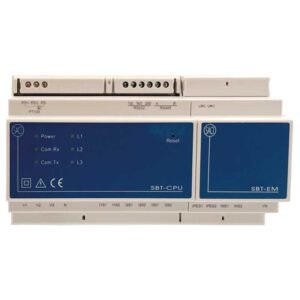
Advanced field measurement: SACI network analysers
The basis of any electricity digitisation strategy is a reliable, continuous and distributed measurement in the field. SACI's network analysers are designed to provide accurate information on the electrical behaviour of installations, allowing electrical magnitudes to be transformed into useful data for management, maintenance and optimisation.
This equipment makes it possible to carry out real-time measurements of energy, power parameters and grid quality, incorporating status monitoring, alarms and advanced analysis functions. Its architecture is designed to adapt to complex switchboards, transformer substations and industrial environments where circuit density and data reliability are critical.
Thanks to its multi-circuit measurement capability and compatibility with various types of current transformers, including systems based on Rogowski probe, SACI analysers facilitate digitisation in new installations as well as in projects to upgrade existing infrastructures. This flexibility makes them a fundamental pillar of Smart Grid and electric IoT architectures.
See how a network analyser solution can help you digitise and optimise your electrical installation.


Centralisation and data management: SACI concentration systems
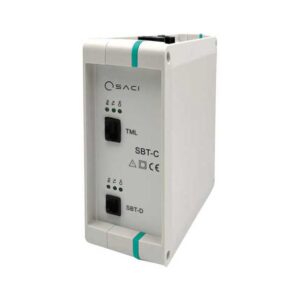
In digitised electrical environments, efficient communication and data management is as important as the measurement itself. SACI's data concentration systems are designed to act as an intermediate node between the field and the monitoring systems, ensuring that information is collected, processed and transmitted in a structured and reliable manner.
These solutions enable the centralisation of large volumes of electrical data from analysers, supervisors and other connected equipment, simplifying the communications architecture and avoiding dependence on dedicated computers for cyclic reading of devices. Thanks to their compatibility with standard industrial and Smart Grid protocols, and the integration of Ethernet and RS485 interfaces, SACI concentration systems facilitate the connection with IoT platforms, SCADA or energy management systems, both in industrial facilities and in network infrastructures.
Discover how to centralise and manage your electrical installation data efficiently.
Low voltage monitoring in Smart Grid environments
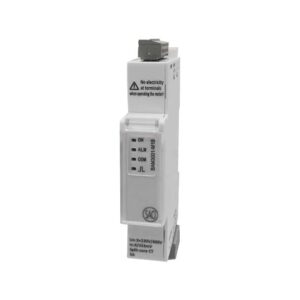
The digitisation of low-voltage networks requires continuous monitoring that allows the real state of the network, its load and the quality of supply to be known. SACI's low-voltage monitoring solutions are aimed at providing this visibility in transformer substations and distribution networks.
These systems make it possible to analyse the load of the centres, detect imbalances, evaluate losses and compare consumption, providing key information for preventive maintenance, network optimisation and the planning of future extensions.
Designed for Smart Grid environments, SACI's low-voltage monitoring solutions incorporate advanced communication capabilities and features aimed at the secure digitisation of critical electrical infrastructures, aligning with new utility technical specifications.
Request information on low voltage monitoring solutions for Smart Grids and transformer substations.

Do you need advice to digitise your installation or adapt your electrical panels to Smart Grid environments?
Our technical team can help you define the most appropriate solution.